Address
804, 805, 8th Floor, Tower B4, Spaze I Tech Park Sec-49, Sohna Road, Gurgaon-122018 , Haryana, India.
Download Alpha Portfolio App


Download Consolidated Portfolio App
Social Media



By Alpha Research
Mar 16, 2021


“You only have to do a very few things right in your life so long as you don’t do too many things wrong.” – Warren Buffet
At times it is smart to stay put. To not move. To do nothing. In a soccer penalty shootout, there is a 33% chance each that the shooter hit the ball to the right, left or straight. If the goalkeeper jumps in anticipation on either side, there is little probability to save the goal. However, if the goalkeeper decides to stay put, there is a 33% chance he saves the goal!!
As investors, we can learn from this situation at times. In times of high volatility, like the current prevailing situation, it may be prudent for the investors to just stay put. Do not stop the SIPs, do not enhance the SIPs, do not do bulk profit booking, do not switch funds. The short run volatility and the after effects of the pandemic will gradually ease out and the economy will track back on a sustainable growth path. At both equity and debt markets, the investors can take it easy.
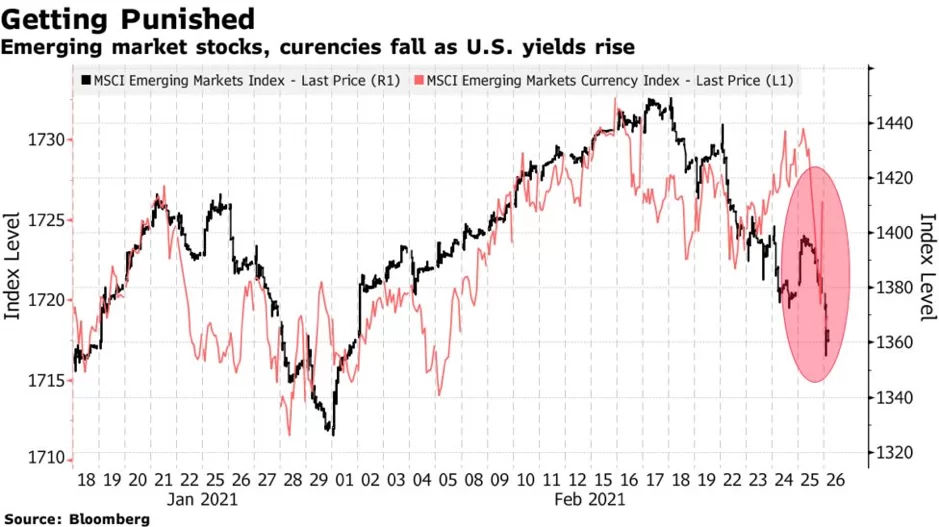
The recent capital flight from the Indian stock markets can be attributed to rising US yields. This was primary driven by rising commodity prices and fear for rising inflation. However, investors must stick to the current allocation across equity and debt to tide over the volatility – all asset classes have temporary blips and changing asset classes without much rational thinking can be catastrophic to the targeted return goals. At times staying put – sticking to the long run though – pays stronger.
It is critical to stay cautious both on the equity and debt parts of the portfolio. On the equity front, stay invested for a long term – the markets seem bullish in the next few years. Book profits gradually and make entry at dips. However, excessive profit booking may also not be advisable. Where will the fresh funds be parked in the current economic scenario? An already high stock market or a debt fund at in a rising interest rate scenario or a fixed deposit earning about 5%?
The impending effect of rising inflation could be the reason that most believe. As growth comes back not just in India but globally, inflation is being seen to rise.
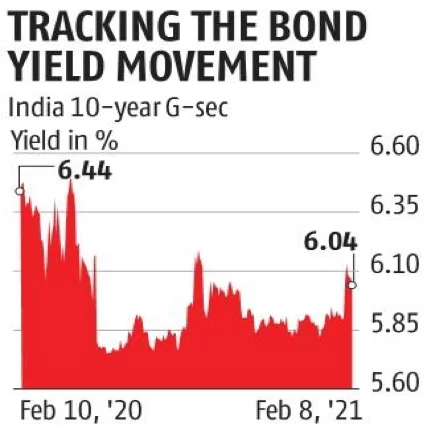
Rising yield (or falling bond prices) happens when bond investors dump existing bond holdings in expectation of high-interest rates in forthcoming bonds. For growth, the government needs funds and often resorts to borrowing from the market to meet the shortfall. Higher borrowing programme of the government is the main reason for upward movement in yields.
However, if the spike in the yields continues in near future, it may be better for investors to shift funds within the debt fund category. “Investor who require the money in the next 6 months to one year, can look to redeem from the high duration products and invest in low duration products.” First-time investors can consider investing in mutual fund schemes in the ultra short term, Low duration and money market category.
Major sources of return for a debt fund are accrual (the interest component) and mark to market (MTM) valuations, done regularly. As yield level moves up, valuations are adversely impacted on an immediate basis. Overtime, accrual moves up too. A longer horizon helps in absorbing the MTM losses, allowing the interest rate cycle to take a full circle and even out the interim volatility. As per the expectations, interest rates will rise over the next year or so, short maturity debt is preferred over the long-term debt.
The important question here to be asked is how long investment horizon is long enough?? Unfortunately, there is no one correct answer. However, as a ballpark, investment horizon equal to the portfolio maturity is thought-out as safe.
So dear investors – focus on the quality of your portfolios – both equity & debt, do nothing till the volatility eases out, and stay invested for a longer tenure to reach the targeted return.
Dr. Tarunika Jain Agarwal Ph.D.
Alpha Research